The Weight of the Wood and the Daily Descent: A Lenten Reflection
A Lenten reflection from the streets of Ortigas. Exploring the heavy reality of the Filipino working class, the exhaustion of the daily grind, and finding unshakeable hope in the finished work of Christ amidst economic uncertainty.
SOCIAL COMMENTARY AND WORKFORCEWORKPLACE REALITIES
CVCII
4/1/20264 min read
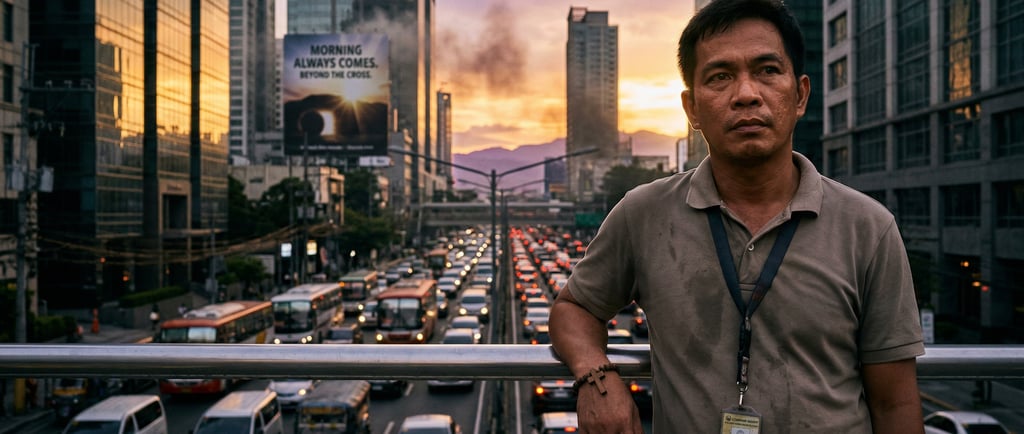
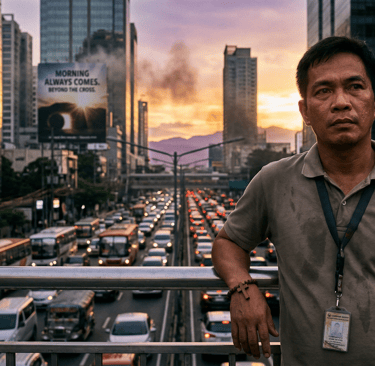
The alarm always sounds before the sun has a chance to crest the ridges of Rizal. At forty-one, my body registers the damp, pre-dawn air a little differently than it did in my twenties; the mornings carry a heavier gravity now. I step out into the quiet streets of Angono, bracing myself for the daily descent into the city.
The commute down Ortigas Avenue Extension is a masterclass in collective patience. Packed shoulder-to-shoulder in a UV Express or a bus, we are a silent brotherhood of the tired and the caffeinated. By the time we hit the bottleneck at Rosario, the sun is fully up, glaring off the chrome of the jeepneys, and the thick, suffocating smell of exhaust fills the cabin. We inch forward, a slow tide of human capital pouring into the basin of the metropolis.
When I finally step out onto the pavement of Ortigas Center, the contrast is sharp. This is a city of glass and steel, designed to look pristine, powerful, and intimidating. But down here on the ground level, waiting for the stoplight at the corner of Julia Vargas, you see the real engine of the district. We are the ones clutching paper cups of convenience store coffee, the ones badge-tapping into the service elevators, the ones who make the calls, push the papers, and keep the sprawling corporate machinery from grinding to a halt.
For the Filipino working class, the concept of carrying a cross is not merely a seasonal religious metaphor—it is a Tuesday morning.
The domestic reality we navigate is heavy. Inflation continues to quietly steal the purchasing power of the daily wage, making the simple act of putting food on the table a masterclass in budgeting. We hear the jargon of million-peso deals in the elevators while worrying if the price of rice and utilities will spike again next month. Meanwhile, global tremors—wars oceans away, supply chain disruptions, and shifting economic tides—ripple directly down to the price of fuel at our local pumps. The working man and woman bear the brunt of systems that often feel brittle and stacked against them.
Yet, if the crucible of the past few years has taught us anything, it is the absolute limit of human certainty.
The COVID-19 pandemic stripped away the illusion that we are entirely in control of our destinies. It broke economies and halted the globe, but it also revealed a profound truth about the architecture of our society: when the world stopped, it was the working class who held it together. It was the food producers, the delivery riders, the rank-and-file employees, and the small business owners pivoting their trades who kept the pulse of the nation beating.
The lesson from that era is not just about resilience; it is about the necessity of adaptation. We learned that when grand institutions falter, we must lean heavily on our immediate, local communities. We adapt by embracing the quiet dignity of honest work, by learning new skills to navigate an increasingly digital landscape, and by holding our plans with an open hand, recognizing that our ultimate security cannot be found in a shifting economy.
Here is where the deep, quiet truth of Lent intercepts our national and personal exhaustion.
In the Philippines, Lent does not arrive in the quiet cloisters of an ancient monastery; it arrives in the glaring, humid heat of the streets. It is heavily marked by our cultural striving—human efforts to suffer alongside Christ, to earn favor or demonstrate devotion through physical penance. But a deeper, more profound reflection calls us to look not at our own bleeding hands, but at His.
The cross is the ultimate proof that God is not aloof to the suffering of the broken world. But more importantly, the cry of "It is finished" is the ultimate disruption to the human rat race.
In a world where our labor feels endless and our anxieties multiply with the evening news, the finished work of Christ offers true, unshakeable rest. It shifts our perspective from a frantic attempt to secure our own salvation—both spiritually and materially—to a quiet trust in the sovereignty of a God who holds history together. We are reminded that the chaos of the global stage and the struggles within our own borders are not random, meaningless events. They are occurring under the watchful eye of a redeeming God.
How, then, do we move forward with hope?
We adapt by anchoring ourselves to what is eternally true. True hope is not a naive, manufactured optimism that ignores the rising prices or the global unrest. It is a gritty, historically grounded confidence.
We continue to build our lives. We steer our businesses and careers with integrity, we advocate for the welfare of the worker, we raise our families, and we adapt to new technologies, knowing that our labor is not in vain. But we do these things without the crushing anxiety of those who have no anchor. When the systems of the world feel rigged, the simple act of doing your job well and dealing honestly with your fellow man becomes its own quiet rebellion.
By the time the day ends and I am waiting for a ride back up the hill, the sky over Pasig has usually turned a bruised purple. The buildings light up, transforming Ortigas into a glowing grid against the night. I look at it from the window of the van as we climb back towards the cooler air. The weight of the day begins to lift. The labor is done.
Lent is the stark reminder that the shadows of Good Friday are very real. The sorrow, the exhaustion, and the injustice of the present age are heavy burdens. But Lent is also the promise that Sunday is inevitable. The road is steep, and the heat is fierce, but we do not walk it alone. The debt has been paid, the tomb is empty, and no matter how dark the Friday, the morning always comes.
Let's talk
careers@agileassisthr.com